

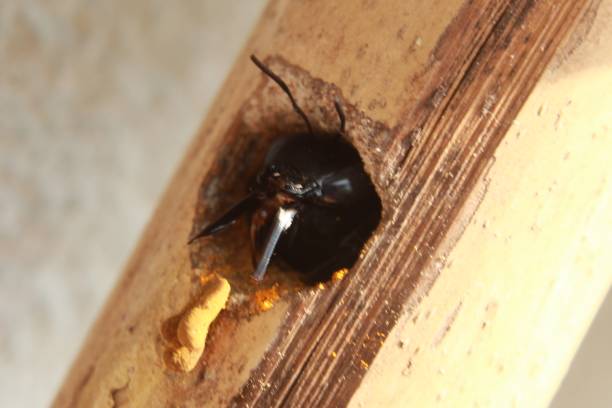
Carpenter bees are notorious for boring holes into wooden structures, causing damage to decks, fences, siding, and eaves. While they are less aggressive than other stinging insects, their burrowing habits weaken wood over time, potentially compromising the structural integrity of your home. Carpenter bees typically create round, smooth holes about ½ inch in diameter, where they lay eggs and shelter during colder months. If left untreated, multiple generations can infest the same area, expanding the tunnels and worsening the damage. Understanding how to get rid of carpenter bees quickly is essential for preventing long-term issues and protecting your property from costly repairs. This article outlines effective methods to eliminate carpenter bees and prevent future infestations.
Best Ways to Get Rid of Carpenter Bees Quickly
1. Identify Active Nesting Sites
The first step in eliminating carpenter bees is locating their nesting sites. Carpenter bees prefer untreated or weathered wood and are commonly found around decks, porches, window frames, and wooden railings. Look for telltale signs such as round holes, fine sawdust (called frass), and yellowish stains near entry points. You may also hear faint buzzing sounds coming from inside the wood. Once identified, mark these areas for treatment. Addressing active nests promptly prevents further expansion and limits the damage to your wooden structures.
2. Apply Insecticidal Dust Directly into the Holes
Insecticidal dust is one of the most effective treatments for eliminating carpenter bees inside their tunnels. Products containing deltamethrin or cyfluthrin work by penetrating deep into the burrows, ensuring that both adult bees and larvae are affected. Use a bulb duster to inject the dust directly into the entrance holes. This method targets the bees where they nest, providing long-lasting protection as the dust remains active within the tunnels. Apply the dust in the evening or early morning when bees are less active, minimizing the risk of stings. Repeat the application if new holes appear.
3. Seal the Holes with Wood Putty or Caulk
After treating the nests, it’s crucial to seal the holes to prevent bees from returning or reusing the tunnels. Use wood putty, caulk, or wooden dowels to fill the holes completely. Painting or staining over the sealed areas adds an extra layer of protection, as carpenter bees are less likely to drill into treated surfaces. Ensure that the sealant is applied smoothly and blends well with the surrounding wood to maintain aesthetic appeal. Sealing holes not only deters reinfestation but also restores the structural integrity of the affected area.
4. Use Liquid Insecticide Sprays Around Infested Areas
Liquid insecticides create a protective barrier around wooden structures, preventing carpenter bees from boring new holes. Spray insecticide along eaves, railings, wooden beams, and fascia boards, covering all areas prone to infestation. Choose a residual spray that provides long-lasting protection and reapply it every few months during the bee’s active season (spring to late summer). This method is particularly effective for deterring new colonies from forming, ensuring your home remains free from carpenter bee activity. Pay extra attention to untreated wood, as it is more susceptible to infestation.
5. Install Carpenter Bee Traps
Carpenter bee traps are an eco-friendly solution that mimics the bees' natural nesting preferences. These traps consist of wooden blocks with pre-drilled holes leading into a glass or plastic jar. When bees enter the holes, they become trapped inside the jar and cannot escape. Place traps near areas with visible activity, such as under eaves or along wooden beams. Regularly check and empty the traps to maintain effectiveness. Carpenter bee traps work best when combined with other treatments, providing a non-toxic, chemical-free way to reduce the bee population.
6. Paint or Varnish Exposed Wood
Carpenter bees are attracted to bare, untreated wood. Painting or varnishing wooden surfaces creates a protective coating that deters bees from drilling into the material. Opt for oil-based or polyurethane finishes, which are more resistant to weathering and provide longer-lasting protection. Repaint or reseal wood regularly, especially after heavy rain or direct sun exposure, as wear and tear can make the wood vulnerable again. This preventive measure not only enhances the appearance of your home but also significantly reduces the likelihood of carpenter bee infestations.
7. Replace Damaged Wood with Hardwood or Composite Materials
If carpenter bee infestations persist, consider replacing vulnerable wood with hardwood or composite materials that are less appealing to the insects. Pressure-treated lumber, PVC, and composite decking are more durable and resistant to burrowing. These materials provide long-term protection and require minimal maintenance. Focus on replacing wood in areas where infestations are most common, such as porch railings, wooden posts, and siding. This investment not only safeguards your property but also reduces the need for recurring treatments.
8. Call a Professional Exterminator
Severe or widespread carpenter bee infestations may require the expertise of a pest control professional. Exterminators use advanced tools, insecticides, and sealing techniques to eliminate large colonies and prevent reinfestation. They can conduct thorough inspections, identify hidden nests, and provide customized treatment plans based on the severity of the infestation. Professional services offer long-term protection and peace of mind, ensuring your property is safeguarded against further damage. This option is ideal for homeowners dealing with persistent carpenter bee problems.
Other Ways to Get Rid of Carpenter Bees Quickly
1. Citrus Oil Spray – Carpenter bees dislike the smell of citrus; spray citrus oil around wooden surfaces to repel them.
2. Almond Oil – Apply almond oil inside existing holes to prevent bees from returning to their nests.
3. Essential Oils (Peppermint, Tea Tree) – Mix essential oils with water and spray them around areas prone to infestation.
4. Noise and Vibration – Loud noises or vibrations near nesting sites can disturb and drive carpenter bees away.
5. Soapy Water Spray – A mixture of dish soap and water can be sprayed directly onto the bees, suffocating them.
Things to Consider When Treating Carpenter Bees
1. Timing of Treatment:
Carpenter bees are most active during spring and early summer when they search for nesting sites. Begin treatments early in the season to prevent colonies from establishing. Treating existing nests before the eggs hatch reduces the risk of a larger infestation. Consistently monitoring your property during peak seasons ensures early detection and faster control.
2. Protecting Pollinators:
While carpenter bees can cause damage, they are also valuable pollinators. Avoid using insecticides that harm other beneficial insects, such as honeybees or butterflies. Focus treatments directly on affected areas, and use non-toxic deterrents whenever possible. By balancing pest control with pollinator preservation, you protect the ecosystem while safeguarding your home.
3. Regular Inspections:
Perform regular inspections of wooden structures to catch early signs of carpenter bee activity. Look for small round holes, sawdust piles, and bee activity around wood surfaces. Addressing potential issues early prevents more extensive damage and reduces repair costs.
4. Weather Conditions:
Treating carpenter bee nests during dry, calm weather maximizes the effectiveness of insecticides and sealants. Rain can wash away treatments, while wind can scatter insecticides, reducing their potency. Plan treatments during favorable weather to ensure lasting results.
5. Long-Term Prevention:
Combining multiple methods, such as sealing, painting, and regular inspections, provides the most effective long-term protection. Implementing preventive measures consistently each year significantly reduces the chances of reinfestation.
In Summary
Learning how to get rid of carpenter bees quickly is essential for protecting wooden structures from long-term damage. By identifying nests, applying treatments, and sealing holes, you can effectively eliminate carpenter bees and prevent future infestations. Consistent maintenance and preventive measures ensure your home remains carpenter bee-free, preserving its structural integrity for years to come.
.jpg)
.jpg)
.webp)
.webp)
.jpg)

.jpg)



.jpg)


.jpg)